
This section highlights research collaborations that have come about as a result of utilising the EPHect tools.
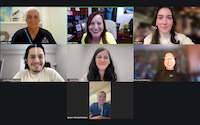 LatiENDO is a collaborative research initiative that unites leading endometriosis centers across Latin America and Spain to investigate the genetic architecture and phenotypic spectrum of endometriosis in women from this historically understudied region of the world. By harmonising clinical, lifestyle, environmental, and biospecimen data across sites, the consortium will enable large‑scale genomic and phenomic analyses aimed at identifying region‑relevant risk variants, clinical patterns, and outcomes. Working closely with patient organisations, professional societies, and health authorities, LatiENDO seeks to translate its findings into evidence‑based strategies that improve diagnosis, management, and equitable access to care for women affected by endometriosis in Spanish speaking countries of Latin America and Spain.
LatiENDO is led by professor Idhaliz Flores (Puerto Rico), doctor Dora Koller (Spain), and professor Francisco Carmona (Spain), and has involvement from investigators in Argentina, Chile, Colombia, Costa Rica, Guetemala, Mexico, and the USA.
 The ESP study next phase of the IEGC is discovering novel genetic variants associated with specific endometriosis subphenotypes defined by symptom and macro-surgically visualised presentation. These novel subphenotype-specific variants will suggest distinct physiologic pathways that underlie the poorly understood endometriosis heterogeneity. ESP is also determining the common and unique genetic variants that are associated with the higher risk of subsequent development of cancers, cardiovascular diseases, and life-impacting fatigue among women with endometriosis.
The ESP is led by professor Stacey Missmer (USA), associate processor Kathryn Terry (USA), and professor Krina Zondervan (UK).
 The improved ease of multi-centre data integration is exemplified by WisE, which in 2019 combined the EPHect EPQ and SSF with detailed endometriotic tissues and blood aliquots collected and processed uniformly through the implementation of the EPHect tissue and fluids SOPs, yielding peripheral immune and inflammation markers plus lesion gene expression bulk, single-cell, and spatial data from more than 1000 patients and more than 500 tissue samples.
Combining these deep and wide, broad stroke and minute characteristics and biologic markers from the full spectrum of patient symptoms and experiences from adolescents though mid-life adults is yielding seminal knowledge with clinical translational potential for defining patient groups and personalised treatment targets.
WisE is led by professor Stacey Missmer with associate processor Kathryn Terry in the USA and professor Krina Zondervan with associate professor Christina Becker and professor Katy Vincent) in the UK. During its second wave, professor Andrew Horne joined this initiative with doctor Doug Gibson and doctor Lucy Whitaker, also from the UK.
 The first coordinated efforts from the global south to generate prospective evidence on pregnancy outcomes among women with endometriosis establishing a multicentre clinical research platform focused on endometriosis, fertility, and pregnancy outcomes in the Indian population. The project examined how different endometriosis phenotypes influence obstetric outcomes in diverse populations, while contributing data from a low- and middle-income country setting to the global evidence base on endometriosis and maternal health.
ECGRI is led by doctor Rahul Gajbhiye, ICMR–National Institute for Research in Reproductive and Child Health (India), and brought together tertiary care hospitals and academic centres across several regions of India, including Mumbai, Kolkata, Thiruvananthapuram, Lucknow, and Guwahati.
 Eutopic endometrial tissue from close to 700 patients accumulated from eight sites across the globe – all collected in compliance with the EPHect SOPs for tissue collection and processing, combined with the EPHect harmonised data collection took less than one year to compile to generate the largest DNA methylation study of drivers of endometriosis risk. Published in Communications Biology in 2023, insights into mQTL regulation and endometrial function included never before powered subtype exploration.
This global consortium is led by professor Linda Giudice (USA), professor Stacey Missmer (USA), professor Grant Montgomery (Australia), professor Peter Rogers (Australia), professor Philippa Saunders (United Kingdom), professor Marina Sirota (USA), post-doc Julia Vallve-Juanico (Spain), and Krina Zondervan (United Kingdom).
 TRiPP focused on two specific types of chronic pain: endometriosis-associated pain (EAP) and bladder pain syndrome (BPS). Both conditions are currently treated by targeting the periphery (the endometriotic lesions in the pelvis or the bladder), but these treatments are often ineffective. The main hypothesis of TRiPP is that the pain symptoms experienced by women with these conditions are generated and maintained by mechanisms similar to those found in other chronic pain conditions, but occur in combination with specific pathological lesions and symptoms. We believe that reconceptualising these conditions in the context of the multisystem dysfunction known for other chronic pain conditions rather than as end-organ pathologies has the potential to revolutionize our understanding of the conditions, allow us to identify meaningful subgroups of patients, develop better preclinical models and thus ultimately facilitate drug development in this field.
TRiPP was led by professor Katy Vincent, University of Oxford, and Dr Jens Nagel, formerly of Bayer Pharmaceuticals. It was part of the EU IMI-PainCare consortium comprising representatives from 17 consortium partners in Denmark, France, Germany, Ireland, Netherlands, Portugal, Spain, United Kingdom, and the USA.
 The MAR’A Project is an epidemiological study focused on gynaecological health in the Middle Eastern region, aiming to understand women’s reproductive health patterns and outcomes. The project collaborates closely with stakeholders and policymakers in the United Arab Emirates to provide evidence-based national strategies and actionable recommendations for 'best practise to improve women’s reproductive health across the region.
The project is led by assistant professor Mira Mousa, Khalifa University (UAE), and includes collaborators from Egypt, Jordan, and Saudia Arabia.
 The International Endometriosis Genomics Consortium (IECG) began in 2005, combining genetic and genetic epidemiologic expertise from the United Kingdom and Australia. In 2006, the EGC expanded the global patient populations to include the USA.
This group and a growing consortium of contributors across the world have continued to embrace evolving genetic analytics to produce genome-wide association meta-analyses, including the third publication in Nature Genetics in 2023, which identified 42 genome-wide significant loci and confirmed hereditary overlap with chronic overlapping pain conditions and pain pathophysiology.
The IEGC is led by professor Stacey Missmer (USA), professor Grant Montgomery (Australia), professor Krina Zondervan (United Kingdom).